Travis–Pandora
Big BrotherTravis–Pandora is a father-daughter relationship defined less by sustained intimacy than by asymmetrical attention and the work Pandora does to maintain contact. Travis rarely asks about her life, misses or nearly misses her birthday, and leaves much of the practical and emotional labor of family connection to his daughters. Yet the relationship remains consequential: Pandora’s memories of childhood, her calls to her father, and her efforts to manage the family’s competing claims all reflect the lasting influence of his distance.
A distant father and a dutiful daughter
Pandora speaks with Travis about once a month, partly because the calls make her feel less like she has abandoned her sister Solstice to manage their father alone. Travis, by contrast, calls Pandora rarely and asks about her affairs only in passing. His breezy nickname for her, Pandorama, briefly casts her as a person with special personality, but the family humor does not disguise how little sustained interest he shows in her life. The pattern is not simply a lack of contact: Pandora describes herself as taking responsibility for keeping up a connection that Travis does little to cultivate.
Her sense of duty also exists alongside irritation. When Travis calls, she expects the conversation to consume an hour, much of it devoted to his complaints about his career and the entertainment business. She nevertheless answers and listens. This routine places Pandora in the role of dutiful daughter, even as she sees the relationship as one-sided and finds her father’s preoccupation with his own fortunes exhausting.
Childhood loyalties and the family’s old geometry
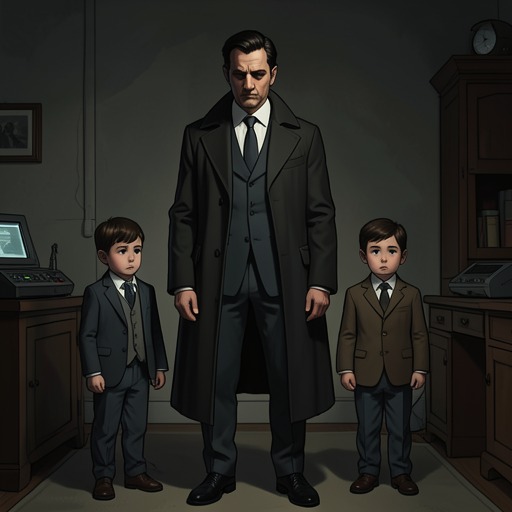
The relationship carries the imprint of Pandora’s childhood with her brother Edison and their father. When Travis entered the kitchen during the children’s time together, the atmosphere changed: Pandora and Edison would turn to homework or silently load the dishwasher, waiting for their father to leave. As an adult, Pandora recognizes a similar social arrangement when her husband Fletcher interrupts a late-night conversation with Edison. Her discomfort comes from feeling that she has repeated the old pattern—that she and Fletcher, rather than she and Edison, should have been the pair whose conversation stopped when their father or husband entered.
This recollection gives Travis’s presence a significance beyond the frequency of his calls. In Pandora’s memory, his arrival could set the terms of a room and redirect the children’s behavior. The adult relationship remains entangled with that earlier hierarchy: Pandora tries to preserve sibling closeness while also negotiating marital obligations, and the familiar feeling of being caught between family members follows her into her own home.
The birthday call and Travis’s self-absorption
The clearest illustration of Travis’s limited attention to Pandora comes in a call made shortly before Edison’s departure for a tour of Portugal and Spain. Travis opens with a long account of his opinions about the television series Mad Men and his hopes of finding new professional opportunities. Pandora says she has not seen the show, though she has not; rather than draw him toward her own affairs, the conversation continues along the route of his interests.
Only afterward does Travis mention Pandora’s birthday. He apologizes for not calling on the day, explaining that he had a stack of fan mail to handle. Pandora realizes that Fletcher’s email of a group birthday photograph prompted the call: without the picture, Travis would have forgotten her birthday altogether, as he had before. The detail makes the relationship’s imbalance concrete. A family snapshot sent by Pandora’s husband supplies the reminder that her father’s own attention did not.
Travis frames the call as an advance payment on the following year’s birthday, then asks whether Edison is still staying at Pandora’s house. He wants to speak to his son, and Pandora hands over the phone before returning to the griddle. In this small exchange, she again acts as the family intermediary: Travis’s contact with Edison is facilitated through her, while Pandora herself recedes from the conversation.
Resentment, recognition, and the limits of reconciliation
Pandora’s feelings about Travis include a measure of satisfaction at his disapproval of her toy company, Baby Monotonous. His view of it as a source of embarrassment makes its success feel like a form of revenge. But Pandora also recognizes the poverty of that gratification. She sees the imagined contest as belated and small, especially because Travis is now in his seventies; the recognition complicates rather than erases her resentment.
She also describes her father as a man whose professional prospects have narrowed, noting that companies producing even products she considers mortifying have stopped using his endorsement. That observation belongs to her larger view of Travis’s self-absorption and decline, but it does not make her withdraw from the relationship. Instead, she continues the calls and continues to carry responsibility for family contact, even while understanding that attention and affection are not being returned in equal measure.
A relationship embedded in wider family conflict
Travis’s distance affects more than his direct exchanges with Pandora. Solstice complains that Pandora has kept her from knowing about Edison’s troubles, arguing that she too is Edison’s sister and could have reached out. Pandora responds that Edison’s privacy is his to protect and that Solstice’s relationship with him is not her responsibility. She also believes Solstice will not actually initiate contact, because she is afraid of Edison. The argument exposes Pandora’s position as a gatekeeper of family information: she tries to protect Edison while also deciding what other relatives are allowed to know.
That responsibility echoes the daughterly duty behind Pandora’s regular calls to Travis, but the two situations are not identical. With Travis, Pandora maintains contact despite his limited interest in her; with Solstice, she refuses to accept sole responsibility for creating someone else’s relationship with Edison. The contrast suggests a boundary she has difficulty enforcing but can articulate: family connection matters, yet one relative cannot indefinitely do the work for everyone else. Travis–Pandora therefore functions as part of the book’s broader pattern of family ties sustained through uneven labor, old loyalties, and the effort to decide where duty ends.